
What news from the Rochdale borough means for learners
A clear explainer for students and educators: what Rochdale borough news covers, why it matters for classrooms, and how to use it in study and projects.

This explainer shows how news from the Rochdale borough can support classroom learning and independent study. It explains what kinds of information students should look for, and how to verify it in reliable sources. The goal is to use local news to build critical thinking and research skills across subjects.
First, identify the local issues that touch everyday student life, from schools and housing to transport and community events. Second, assess the credibility of reports by checking date, source, and corroborating evidence. Third, connect stories to coursework or projects to practice analysis and citation.
Throughout, the emphasis is on practical use: turning a news item into a learning prompt, a reference for assignments, or a discussion starter in class.
- Local Rochdale borough news helps learners connect coursework with real events.
- Focus on credibility, evidence, and the timeline of a story to build critical thinking.
- Use stories as prompts for projects, discussions, and annotated bibliographies.
Basics: what local news can teach students
What counts as local news
Local news covers events, decisions, and issues that affect a specific town or district. For learners, it shows how public services work and how communities respond to change. It also demonstrates journalistic basics, such as sourcing and timelines, in a familiar setting. One useful frame is to compare several items of news from the Rochdale borough to spot common themes.
- Identify the main issue in a story.
- Note the source and date of the report.
- Ask what evidence supports the claims.
- Consider who is affected and how.
Students should track what stories appear most often, who is quoted, and what data is used. This builds a habit of mindful reading rather than passive skimming. Look for connectivity: how one story relates to schooling, transport, or safety.
When you read Rochdale borough news, note the date and origin of each report. This helps students place information in a real-world timeline and strengthens evidence gathering.
Sourcing and reliability basics
Every story has a source. Teaching students to check whether it comes from a reputable outlet or an official notice helps distinguish fact from rumor. In Rochdale borough news, look for government statements, school updates, or community groups as reliable anchors.
Compare reports on the same issue from different outlets. Divergences can reveal bias, missing context, or new developments. This practice trains careful listening and note-taking for coursework.
Create a simple worksheet that asks for date, origin, evidence, and the perspective offered. This makes it easy to summarize and compare multiple reports.
How to use Rochdale borough news in study

Framing a research question
Start with a question that connects to your course. For example, how does a new school policy affect student teams or transport routes? A clear question guides what data you collect and how you interpret it. A useful resource on this topic: news from the Rochdale borough.
Extract relevant facts from a story—dates, actions, outcomes—and record them in a simple timeline. This helps you visualize cause and effect and supports narrative writing in assignments.
Encourage peers to discuss different readings of the same event. Small debates strengthen critical thinking and presentation skills for class work.
- Define a question
- Extract key facts
- Create a simple timeline
- Discuss interpretations
Linking to coursework
Local stories can illustrate subjects from geography to civics. For geography, map the locations involved and discuss how infrastructure affects communities. In civics, examine how councils or boards communicate decisions and what that means for accountability.
Use a story as a case study: outline the problem, the response, and the outcomes. Compare it to a theoretical model you study in class to see where theory matches or diverges from practice.
Document sources and prepare a brief annotated bibliography for an assignment. This builds academic integrity and planning skills.
Options for staying current and evaluating impact
Choosing credible feeds
Start with official channels: council notices, school district pages, and established local outlets. These tend to be more stable and transparent about updates. Pair them with community-forward sites to gain different perspectives.
Create a routine: a weekly 15-minute scan of a small set of sources. This keeps learners informed without overload and supports steady research habits.
Keep a log of what you read and any questions it raises. Over time, patterns emerge that anchor your understanding of local issues.
- Official pages as base
- Supplement with diverse voices
- Weekly scanning routine
- Reading log
| Option | Strengths | Drawbacks |
|---|---|---|
| Official feeds | Stable updates, transparent at times | May lack critical voice or counterpoints |
| Diverse outlets | Broader perspectives, richer context | Quality varies; verify dates and authors |
| Community sites | Grounded in local experience | Potential bias and limited editing |
From news to classroom activity
Turn a story into a class task: write a short briefing, draft a response letter, or create a data chart from reported figures. These activities build comprehension and practical skills.
Group projects work well when each member analyzes a separate source and then shares findings. This mirrors how professionals corroborate information before decisions.
Document design matters: choose concise summaries, clear headings, and properly cited sources to model good academic practice.
A single report can mislead if it omits context or relies on a partial quote.
Pitfalls to avoid when using local news

Common misreads
A single report can mislead if it omits context or relies on a partial quote. Always check what happened before and after the reported moment. Look for the bigger picture rather than a sensational line.
Assuming a policy or decision is final because a story reports a proposal can mislead. Follow-up updates are common as plans evolve statewide or locally.
Relying on a single source for a controversial claim reduces reliability. Seek at least two independent confirmations before drawing conclusions.
- Partial quotes can mislead
- Proposals evolve over time
- Two independent confirmations
Avoiding overload and bias
Local news can be dense. Focus on one study question at a time and annotate sources as you go. This reduces confusion and helps you stay aligned with learning goals.
Be mindful of sensational language that pushes emotion rather than evidence. Distinguish between what is reported and what is interpretation.
When in doubt, ask a teacher or librarian for help interpreting a complex story. A second pair of eyes often clarifies ambiguous points.
Analyzing impact and evidence
Interpreting source credibility
Start with the publisher’s remit and audience to gauge reliability. Compare reporting across outlets to spot echoed facts and divergent interpretations. This helps students practice critical reading and weigh evidence in their assignments.
Look for corroborating details such as dates, locations, and observable outcomes. Note when numbers are absent or approximated and explain why that matters for understanding impact. Building this habit supports more precise arguments in essays and projects.
Finally, connect the article to learning goals by identifying what changed as a result of the news item. Ask how the event affects topics in civics, geography, or social studies and what questions it raises for further study.
- Cross-check dates and venues
- Track consistent facts across reports
- Identify gaps that require further sources
- Assess potential bias in framing
Practical integration into curriculum
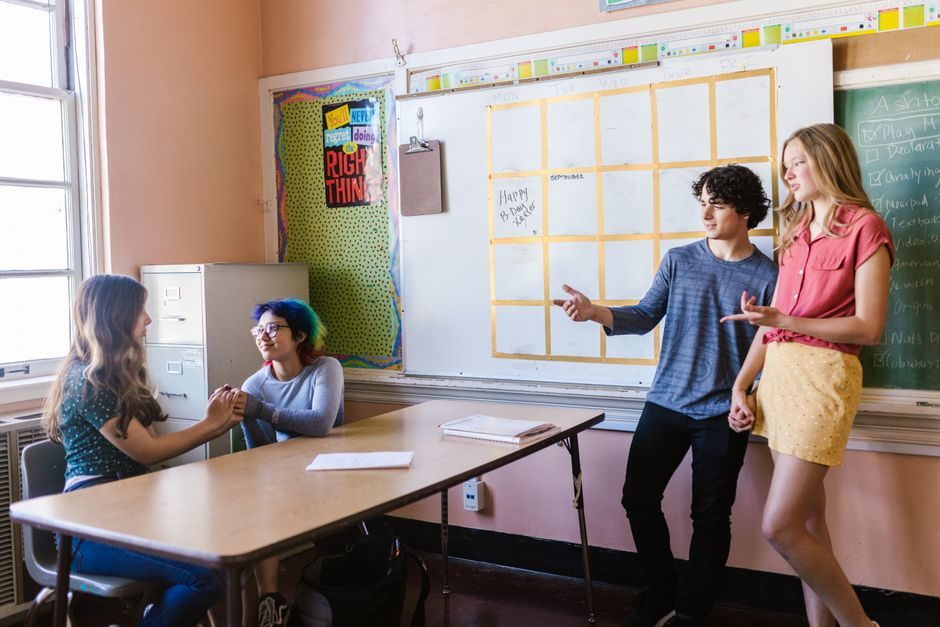
Activities that tie to lessons
Translate a local news item into a classroom activity that mirrors real-world inquiry. Create a short briefing where students summarize the event, identify stakeholders, and propose a measured response. This anchors theory in lived community experience.
- ☐ Choose a valid local source
- ☐ Extract three key facts
- ☐ Map timeline of events
- ☐ Cite sources clearly
Design a data exercise around the article, such as tracking timelines, map changes, or budget implications. Students practice methodical note-taking and evidence-based reasoning while aligning with core curriculum standards.
Finally, assess learning with a reflective piece where students justify conclusions and acknowledge alternative views. Focus on clarity, sourcing, and logical structure to strengthen academic writing.
- Summarize in 150 words
- Identify stakeholders
- Propose a measured response
- Reflect on alternative views
Ethics and responsible reading
Avoiding misrepresentation
Begin by identifying what the article does and does not say. Distinguish facts from interpretations and opinions to prevent misrepresentation in student work.
Respect privacy and avoid sensational edits that distort meaning. Encourage students to paraphrase rather than copy, maintaining accuracy without embellishment.
Conclude with a stance on ethical use: always attribute sources, acknowledge limitations, and present balanced viewpoints when relevant.
- Quote sparingly and accurately
- Paraphrase instead of copying
- Cite every source
- Present balanced views
Advanced local research methods

Using local data responsibly
Introduce students to the basics of local data collection, such as public records or council minutes. Show how to file simple requests or locate official datasets relevant to the Rochdale borough topic.
Teach data literacy: identify variables, assess data quality, and spot missing elements. Students should document data provenance and consider limitations in interpretation.
Close with a practical project where learners assemble a mini report, carefully citing sources and explaining their methodological choices.
- Locate official sources
- Assess data quality
- Document provenance
- Explain methods clearly
Frequently asked questions
How should I judge a local news piece’s trustworthiness?Look for clear attribution of facts, check whether multiple independent sources corroborate the key points, and note any missing data. Trust grows when a piece distinguishes between verified information and opinion and provides a transparent method for sourcing.
What if the article mentions a policy change?Identify the policy’s aims, who it affects, and potential outcomes. Compare the article’s portrayal with official announcements or minutes, and consider broader impacts on learning environments and student opportunities.
How can I use Rochdale borough news without bias in assignments?Summarize neutrally, present competing views, and cite all sources. When drawing conclusions, show the reasoning and highlight uncertainties or alternative interpretations.
Are there risks in using local news for coursework?Yes. Relying on a single source can skew perspective. Mitigate this by triangulating with official documents, seeking student or community voices, and acknowledging data limitations in your analysis.
Closing thoughts for educators and learners
The approach here frames local news as a tool for developing critical thinking, research habits, and civic literacy within academic work. By analyzing impact, designing classroom activities, and embracing ethical reading, students build transferable skills they can apply across subjects.
Take the next step by selecting a Rochdale borough article and designing a short study that connects it to a course area. Encourage students to present findings with clear sourcing and thoughtful discussion of uncertainties, reinforcing responsible inquiry.
Add Atherton FM as a preferred source on Google


